The ComplEAT Kitchen

Welcome to the Tip of the Tongue Newsletter! Thanks to new subscribers and regular readers, especially readers who are recommending Tip of the Tongue to their friends and subscribers!
On Sunday there is always this free newsletter , The ComplEAT Kitchen, about what is going on in my food and drink world, at SoFAB, at the SoFAB Research Center at Nunez Community College, and out in the world. Tip of the Tongue, my podcast, appears on Monday. And one or two more print issues appear during the week for paid subscribers.
Cooking: I am cooking for the week today. While I am experimenting with different ways to buy groceries. I am shopping for bargains, looking for really good produce, and looking for all of the varied spices and other things that I consider important, but not necessarily available in the ordinary grocery. As much as I enjoy grocery shopping, and I really do like it, it takes forever to go to all of these places. So I am trying to streamline my process. If I cook for the week, I can really make sure to use the little bits left over in the next dish, and not waste anything.
So today I made a brown rice with red lentils, with mint, peas, and mushrooms seasoned with parsley, onion tops, leek tops, and thyme. I also made a soup with all the little bits of things that were served during last week, but wasn’t eaten to the last drop. A friend had given me really mature arugula, so I cut off the roots, and cleaned it really well and blanched it. I strained the water to make sure there was no dirt in it and used it as the base of the soup. I chopped half of the arugula as the main bulk. I added chopped onion, garlic, zucchini, a some canned crushed tomato, bay leaves from the garden, mushrooms, peas leftover from the rice with peas. I some pieces of quail leftover, so they went into the soup. I am sure there were other bits and pieces that went in there too. I used dried oregano, thyme, basil, and let it cook, while I continued cooking other things.
I made some brown lentils to have as a side dish during the week. I made a tomato sauce with the rest of the tomatoes, the remaining arugula, lots of chopped onion and garlic, bay leaves, zucchini, and a few leftover peas, chopped red bell peppers. I’ll just boil some pasta when we are ready to eat this. I finished the jam made with Japanese plums from the garden.
And I have made another banana bread without any sugar. I bought some Italian soft whole wheat flour and used that to make the banana bread. It is cooling as I write this.
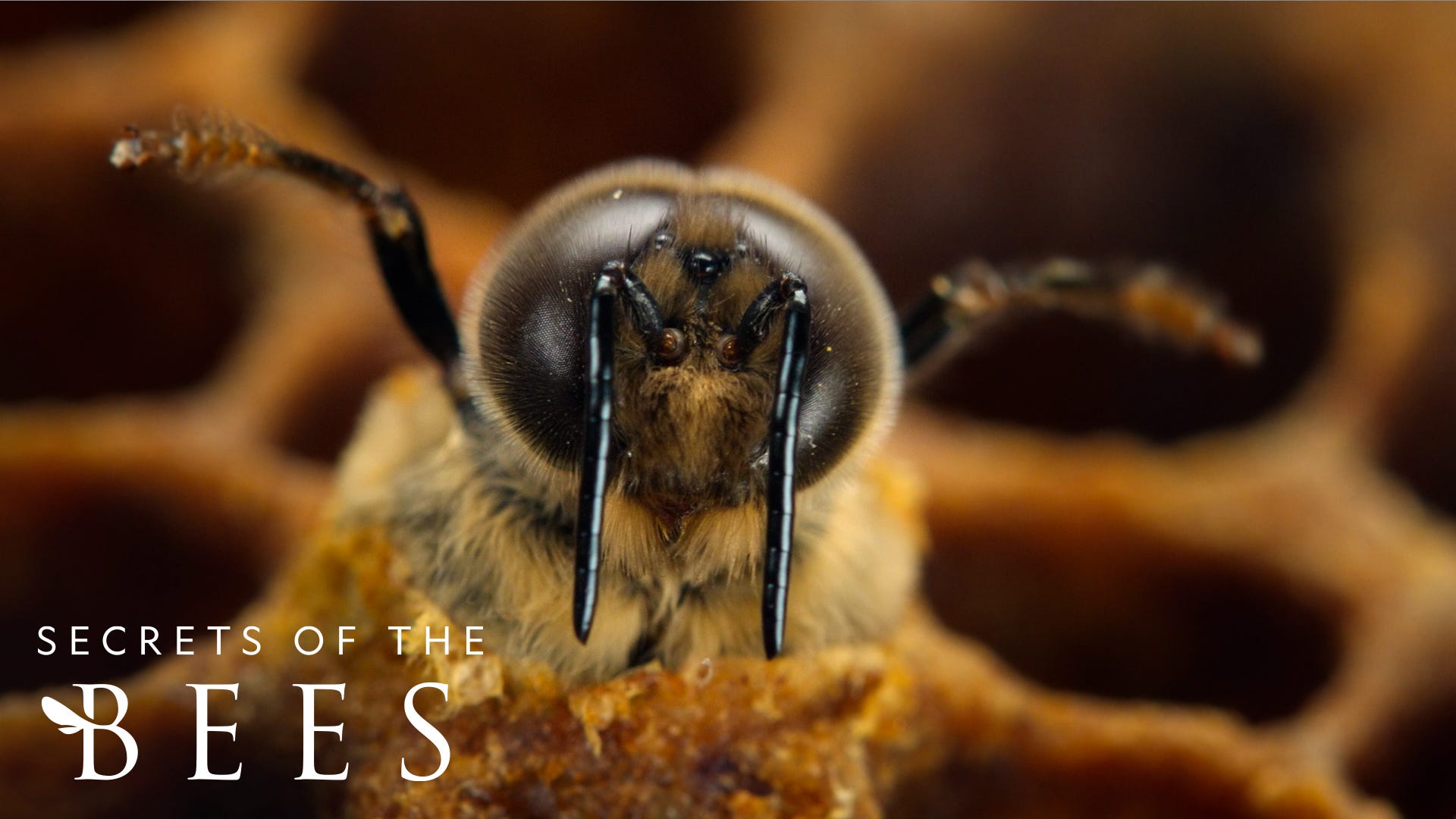
Watching: This week I watched a bee documentary released by National Geographic called Secrets of the Bees. It had all of the hallmarks of a NatGeo movies with slow motion action, which was stunning, by the way, but crammed full of facts. I loved that it really talked about pollinators - non-bee pollinators - reminding us that there is pollination beyond bees. But bees are essential.
I knew that honey bees were not native to the US, but it is worrisome that there are so many honey bees used for pollination, traveling around the country on huge trucks. It has made me very wary of eating American grown almonds. Millions of bees are needed in a short time to pollinate the huge groves of almond plants in California. There is hive theft and a loss of bees during the transportation. We have other native nuts that do not require this intervention. The desire for almonds is quite artificial.
The transporation also uses huge amounts of fossil fuels as bees are trucked in from around the country.
And in addition to bees, the almond groves suck up lots and lots of water in a place where water is not plentiful.
If you can watch this documentary, you will be amazed at all of the inside of the hive shots, which teach us a lot about bee behavior. There was even a segment about bee learning, which speaks to the intelligence of bees. I learned about the variety of bees that exist, even a flesh eating kind called the vulture bee. It makes honey from animal flesh.
Reading: I have been reading Ina Garten and Lee Bailey books together. What I love about each of them is that they use food to tell stories. Even on her television show, Ina Garten has a reason to cook her food that day - she is giving a party, she is celebrating a success of a friend or a friend’s child, or getting ready for a big or small family dinner. I even watched her fix a meal to thank volunteers at a preservation organization on her television show. It is so much a reflection of how we eat together than just a show about how to cook something. She talks about transporting the food to the beach or how to serve it easily. She has friends come in an decorate the table. Lee Bailey did that in his books.
I like that the books are there to help you incorporate food into your life in a creative way, and not just presenting a compendium of recipes. Those massive encyclopedias are useful, but they aren’t good for just reading.
Gardening: Yesterday I bought more herbs at the garden center. They are going into pots so that if we sell our house, they can come with me to where ever I might go.
SoFAB Culinary Research Center at Nunez Community College: Unpacking a box of donated books at the SoFAB Research Center at Nunez Community College we found a real treasure. The Mount Vernon Cookbook: A Selection of Tested Recipes prepared by the Ladies of The First Baptist Church. The book is from Mount Vernon, Missouri and it is dated 1895. It is lovely to thumb through the pages of this book. The penmanship of the owners is beautiful and memorializes part of the history of the book.
Somehow this book came into the possession of Mr. and Mrs. A.S. Hurley in Sage, Wyoming. The names of the owners are signed on a blank front page of the book. Their signatures are dated 1903. Yet another signature, also from Sage, Wyoming, is from Annie Whalen. On yet another blank page is the inscription, “Compliments of Sister Ruth Sedwick to Lottie Lee. Wishing you a long life of prosperity and happiness.” This inscription is undated.
It is exciting to read this book. It tells us so much about mores, what was considered important, and even how people wrote in the late 19th century. As we go about our lives in the 21st century, the book is a veritable time machine. Interestingly the names of the women who contributed are actually stated. For example Mrs. Dora Boyd is listed instead of Mrs. John Boyd. It makes me wonder when Mrs. John Boyd came into use, because 20th century community cookbooks list the names of women contributors under their husband’s names. It is an obstacle to research.
Here is a contribution from Mrs. Anna Case. As with all of the recipes in the book, there is no ingredient list. The recipes are written in the old style, assuming that the reader already knows how to cook. The recipes are just intended to inspire the imagination. I hope that it inspires you.
Stuffed Eggs
Boil six fresh eggs fifteen minutes, remove the shells, cut them into halves, lengthwise. Take out the yolks, mash them fine and add a tablespoonful of finely chopped ham, a dash of cayenne, and a tablespoon of melted butter. Mix all well together and fill back into the whites. Press the two halves together firmly, but gently. Dip into eggs, then into bread crumbs: then again quickly into the eggs, then back into the crumbs and then fry in smoking hot fat.
If you want to make a donation of books or join the Friends of the SoFAB Culinary Research Center, please get in touch with me. My email is lizwillia@gmail.com. Get in touch if you would like a tour of the Research Center or if you would like to volunteer.
Thanks to all of you who have visited, donated, and volunteered at the Research Center. You are the beating heart of the Research Center.
If you enjoy this newsletter, please forward it to friends.
I would love to hear what you have to say.