
The ComplEAT Kitchen

Welcome to the Tip of the Tongue Newsletter! Thanks to new subscribers and regular readers, especially those of youwho are recommending Tip of the Tongue to their friends and subscribers!
On Sunday there is always this free newsletter , The ComplEAT Kitchen, about what is going on in my food and drink world, at SoFAB, at the SoFAB Research Center at Nunez Community College, and out in the world. Tip of the Tongue, my podcast, appears on Monday. This Monday I speak with the editors of Get It While It's Hot: Gas Station, Roadside, & Convenience Cuisine in the U.S. South. And one or two more print issues appear during the week for paid subscribers.
Cooking: On Saturday I demonstrated a new dish at the Creole Tomato Festival in New Orleans at the French Market. I have some of those really ugly Creole tomatoes.
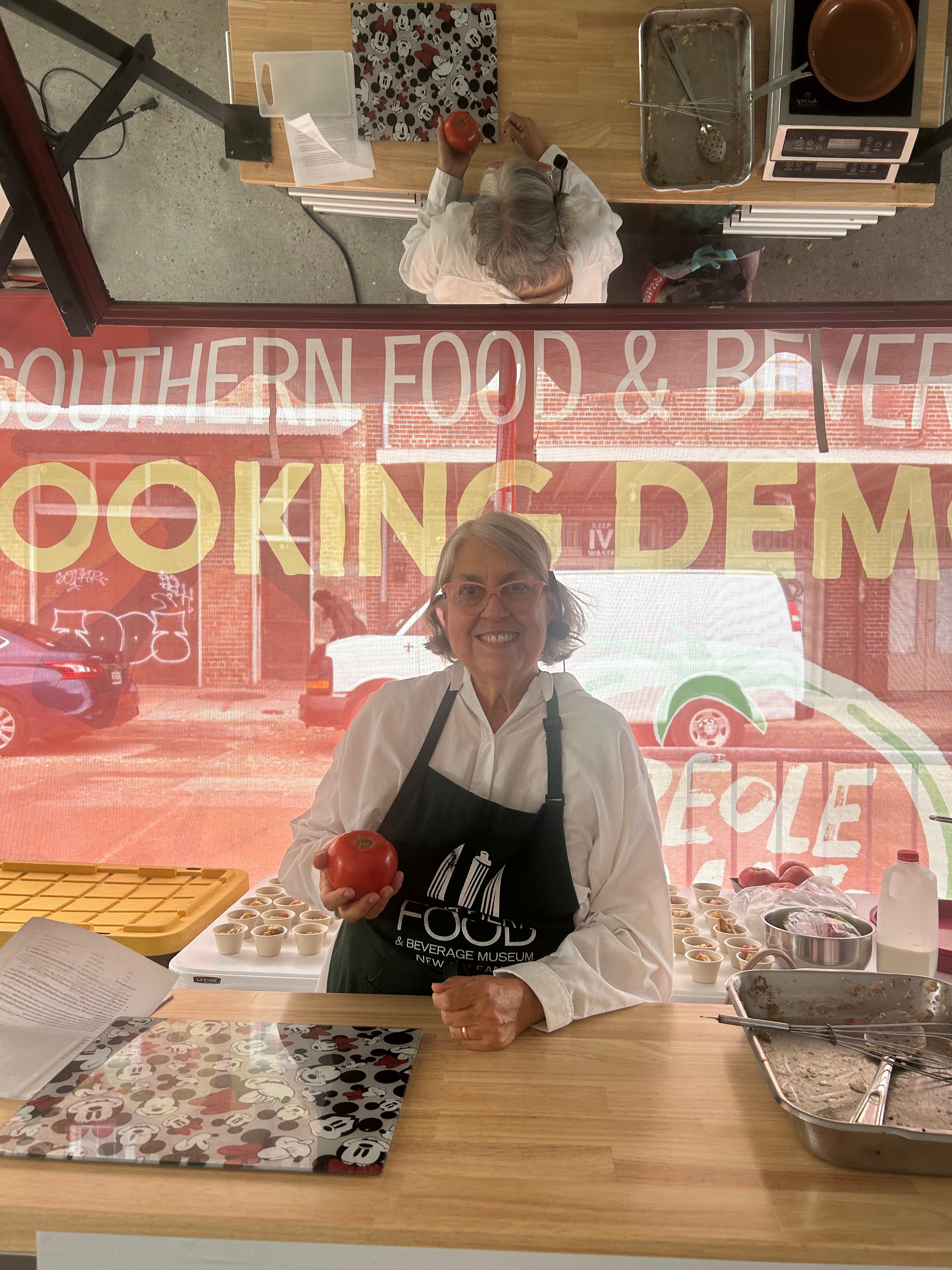
I’m at the demo table. You can see the top of my head reflected in the mirror.
I demonstrated a recipe that I made up for the event: Creole Tomato Bread Pudding.
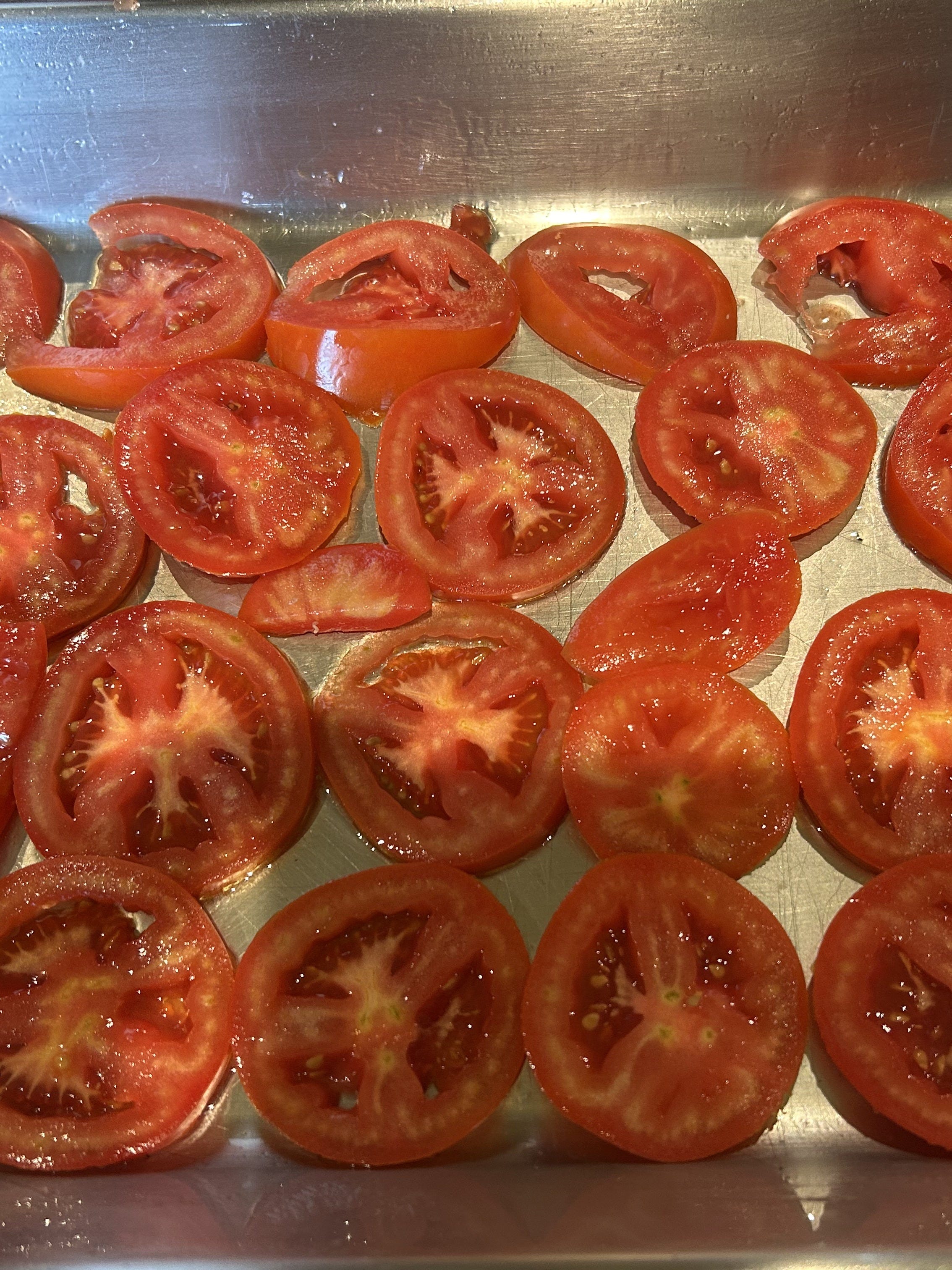
Tomatoes on the bottom of the pan, building the bread pudding.
The weather held out, even though rain was predicted. And we had many people in the audience at the kitchen stage.
Makes 8 -10 servings Preheat oven to 325 F
1 pound Creole tomatoes, sliced thinly with liquid reserved
¼ cup olive oil, divided
2 tablespoons Italian seasoning
5 cloves garlic, minced
1 onion, chopped finely
6 large eggs, cracked and whipped with a whisk
2 cups buttermilk
2 cups grated parmesan cheese
8 cups stale bread cubes from a tasty unsliced loaf
1 6-ounce jar of prepared basil pesto
1 cup drained olive salad
Cracked black pepper
Chopped scallion tops for garnish
1. Salt the tomato slices, place the slices in a colander that sets on a bowl, in order to catch the juices that are released. Set aside while you assemble the rest of the parts.
2. Place 3 tablespoons of olive oil in a skillet and heat. When the oil is shimmering add the oregano to release the flavor. Stir well. Add the garlic and onion and cook until the onions are translucent, 5 to 7 minutes. Stir as needed. When cooked, set the pan aside, off heat, and allow to cool.
3. With a brush, use a tablespoon of oil to coat a 13 by 9-inch pan with high sides. Set the pan aside, but close at hand.
4. In a large bowl, add the eggs, buttermilk, and 1 ¾ cups Parmesan cheese. Add the bread cubes and toss in the egg mixture. Make sure that all of the bread cubes get a chance to absorb the egg mixture. Let stand for 5 minutes. Toss again. This time add the prepared pesto and toss well, trying to make sure that every cube has some pesto.
5. Add the onions and garlic that you had set aside. Also add the olive salad. Toss again.
6. Add of layer of tomatoes across the bottom of the prepared pan. Then add half of the bread mixture, Sprinkle with crushed black pepper. Add another layer of tomatoes. Add the rest of the bread. Cover with the remaining tomatoes. Sprinkle with the remaining Parmesan and more black pepper. Cover with aluminum foil. Place the prepared oven for 45 minutes. Remove the foil and cook another 15 minutes. Remove the pan from the oven and sprinkle with the chopped scallion tops. Let set for 10 minutes and serve.
If you want to play around, you could add chopped capers or chop a few sun dried tomatoes and add them to the custard. You could top the whole thing with more cheese. I was trying to let the tomatoes shine!
Reading: I have been reading Krys Malcolm Belc’s book, What I Made for Dinner. It is a pandemic memoir of his descent into obsession with internet chefs. Cooking was a common obsession during the pandemic. Of course, the book is about living life and is organized by the ordinariness of daily food preparation. Even when the world stops, as it did during the pandemic, we still have to eat.
Belc is a trans man. And the perspective of daily life includes more personal issues. And it is clear that daily cooking, not as a hobby, and not just to pass the time during the isolation of the lockdown, is a through line in this journey. As with most things, it is a mixed bag. It is both a joy and a burden. People for whom you cook have an expectation of the level of excellence of your food. They are not only disappointed, but perhaps angry when you don’t meet the expectations that you have set. When you provide a service, not on a one time basis, but so regularly that it becomes an expectation, you are not really allowed to have a bad day or even expect a little appreciation every once in a while. Very interesting book for anyone who is the family cook.
The SoFAB Culinary Research Center at Nunez Community College: New boxes of books are constantly coming to the SoFAB Research Center at Nunez Community College. This week, working with our new intern, I uncovered a charming book from 1909. It is called 365 Orange Recipes: An Orange Recipe for Every Day of the Year. The book was published in Philadelphia by George W. Jacobs & Co., Publishers. On the cover is a picture of a chubby, mustachioed man in a chef’s toque, a white shirt and a white apron. His eyes are closed and he is twirling his mustache. The printing is orange.
As the pages are turned the days of the month begin to roll by, each with a recipe. The recipes are surrounded in the margins my orange-colored line drawings of cruets, pitchers, cups and saucers, and other things from the table. The recipes are savory as well as sweet, but lean toward the sweet. The first recipe in the book is for New Years’ Pudding. The last recipe is for Harvard Pancakes. The index lists all of the recipes in alphabetical order. And the inside covers are covered with line drawings in orange.
I have not found a clue as to why this book was written and published with no identified writer. I am intrigued by this book. It would be a godsend to someone with a few orange trees. If anyone is up to the challenge, come by the library at Nunez Community College to see the book. Maybe you can venture a guess as to why it was published.
I have chosen the January 13th entry – Orange Gingerbread – for today’s recipe.
Heat 1 3/4 pounds of molasses and ¾ pound of butter over a slow fire; beat well and add ¾ pound of brown sugar, 2 ¼ pounds of flour, ½ pound of preserved orange peel, 1 ounce ground ginger, 1 grated nutmeg, ½ cupful of orange juice and 1 level teaspoonful of soda. Work the dough well and leave in a cool place over night. Next day turn out on a well-floured board and roll very thin, cut in small squares, lay these one-inch apart on waxed tins and brush over with the beaten yolk of 1 egg mixed with ½ cupful of milk. Bake in a moderate oven, and when done brush again with the egg and milk.
If you make this old-fashioned recipe, let me know how it turns out.
The SoFAB Culinary Research Center at Nunez Community College is a unique resource in the greater New Orleans area. There is no resource quite like it in the Gulf South. Access is available to everyone, whether you are a curious person, a chef, a student, a journalist, or a scholar. We have had people use the Research Center to study what people ate in the past so that their historical novel would be accurate. Scholars have used the Research Center to do research for their dissertation writing. Journalists writing books have used the Research Center to get information needed for their books. You could use the Research Center too.
If you have books to donate, perhaps for the Rawley Collection or perhaps a community cookbook for the Abney Community and Family Cookbook Collection, please be in touch. Write to me at lizwillia@gmail.com. Help us build the largest and best culinary collection. Volunteer. I look forward to hearing from you.